
CASE STUDYDesigning a Place-Based Communication System for a LEED-Certified Engineering Research Facility.
ENGAGEMENT: HIGHER EDUCATION
CLIENT: University of Texas at Arlington
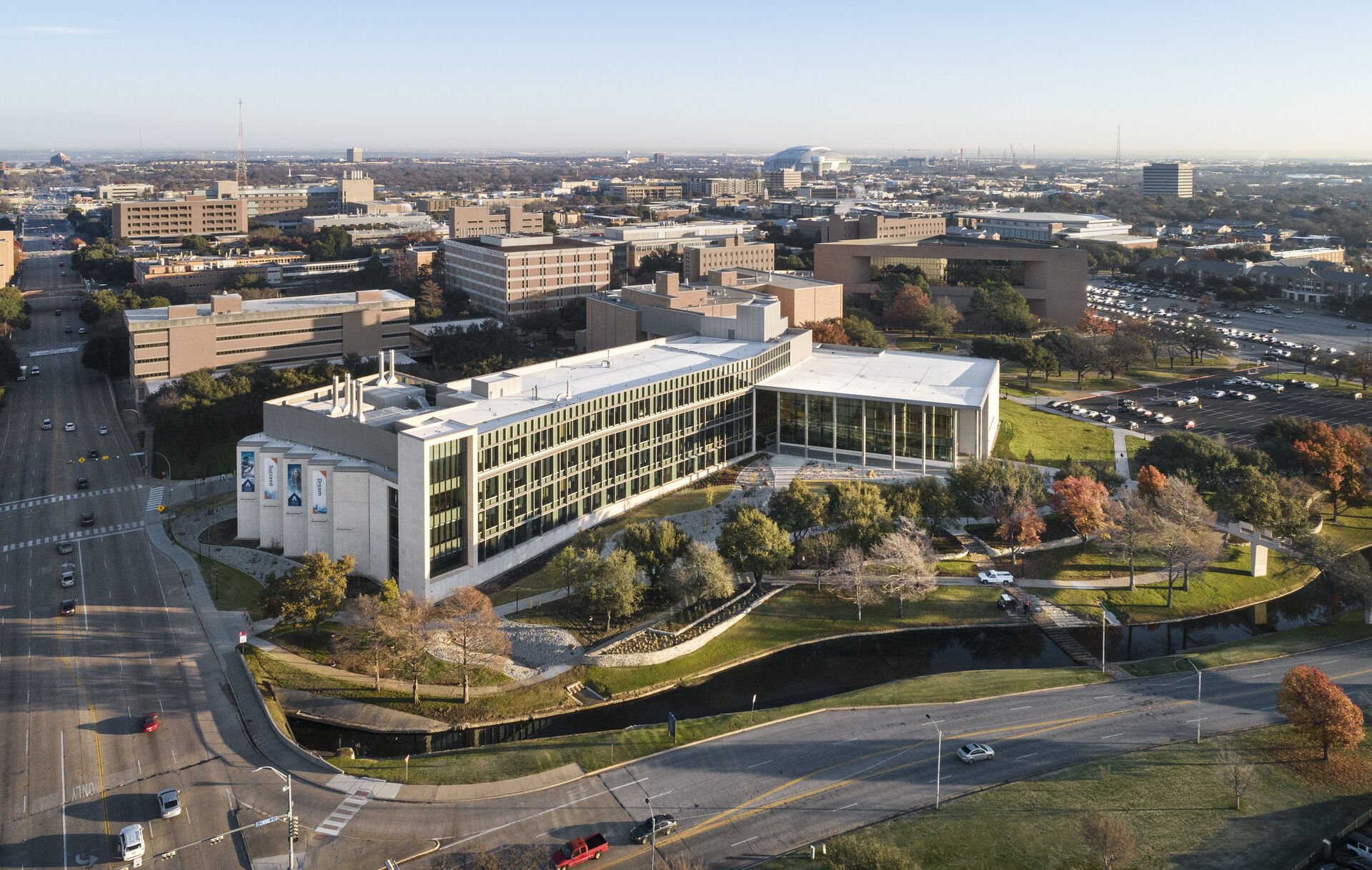
How can a large-scale, LEED-certified engineering research facility translate complex systems, spaces, and sustainability features into a clear, engaging experience that supports recruitment, navigation, and cross-disciplinary collaboration?
Empathy’s Edge designed and implemented a place-based communication and engagement system that translated the building’s advanced research infrastructure into clear, accessible, and interactive experiences. By aligning visual identity, spatial storytelling, and digital interfaces across kiosks, maps, standards, and sustainability narratives, the system connected architecture to user experience, enabling students, faculty, and visitors to navigate, understand, and engage with the space more effectively. This approach strengthened recruitment, increased participation in research initiatives, and supported collaboration across departments.
OUTCOMEThe Opportunity
The University of Texas at Arlington Engineering Research Building was designed as a state-of-the-art, LEED-certified facility supporting advanced research, innovation, and collaboration across disciplines. The building represented a significant investment in infrastructure, sustainability, and institutional growth.
However, the complexity of the space presented a challenge. The building’s advanced systems, research capabilities, and sustainability features were not easily understood by students, faculty, visitors, or external stakeholders. Without clear communication, much of its value risked being underrecognized.
There was an opportunity to translate the building into an experience. One that could support navigation, strengthen recruitment, and make the depth of research and innovation visible, accessible, and engaging across audiences.
The Shift
The work shifted from creating individual materials to designing a cohesive, place-based communication system. Rather than treating wayfinding, branding, and digital interfaces as separate efforts, they were aligned into a unified experience.
A structured visual identity and narrative framework were developed to connect physical space with information and interaction. Kiosks, directories, maps, and print materials were designed as part of a coordinated system, guiding users through the building while reinforcing institutional identity.
Sustainability and research features were translated into clear, digestible content, ensuring that complex systems could be understood at a glance. The result was an environment where communication was embedded into the space itself, supporting both everyday use and strategic engagement.
To support real-world use, the system extended beyond design into the physical environment, embedding clarity, navigation, and storytelling directly into the building experience.
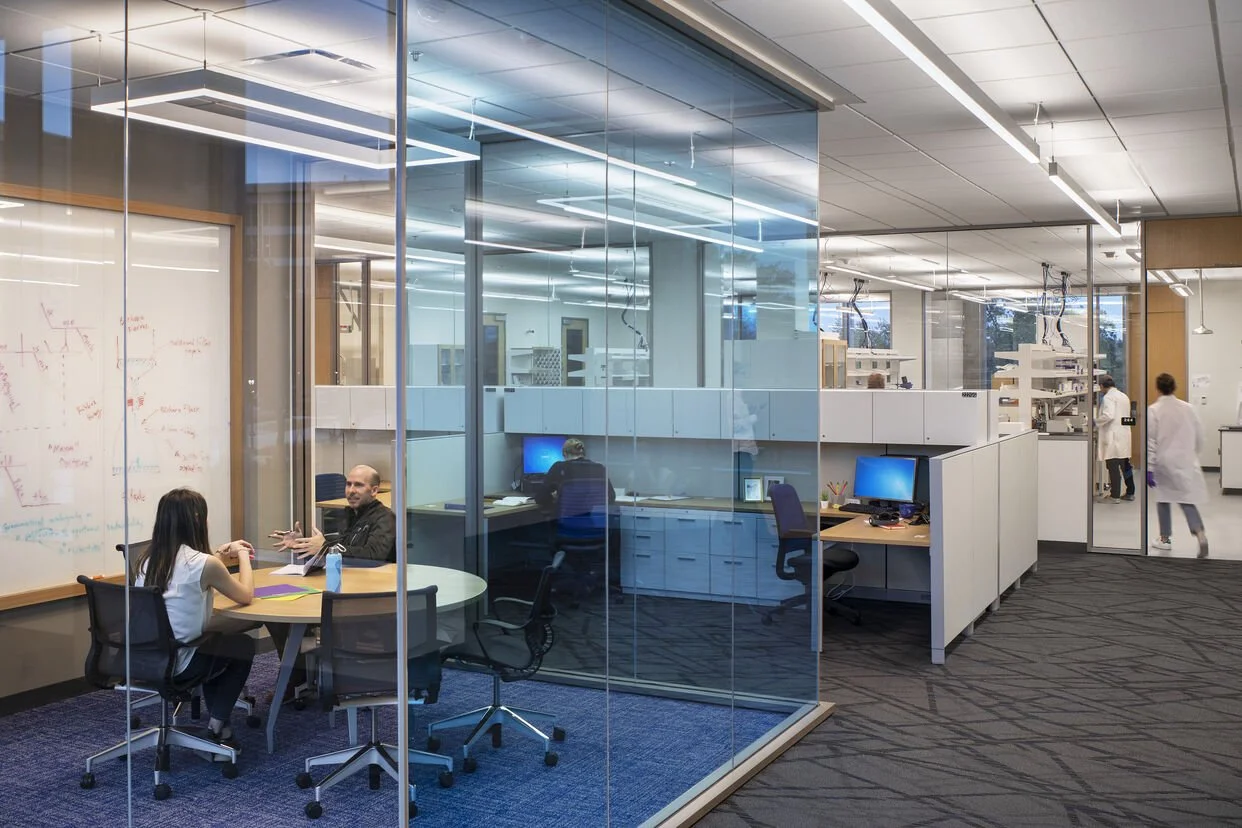
The system transformed how people experienced and interacted with the building.
To support real-world use, the system extended beyond design into the physical environment, embedding clarity, navigation, and storytelling directly into the building experience.
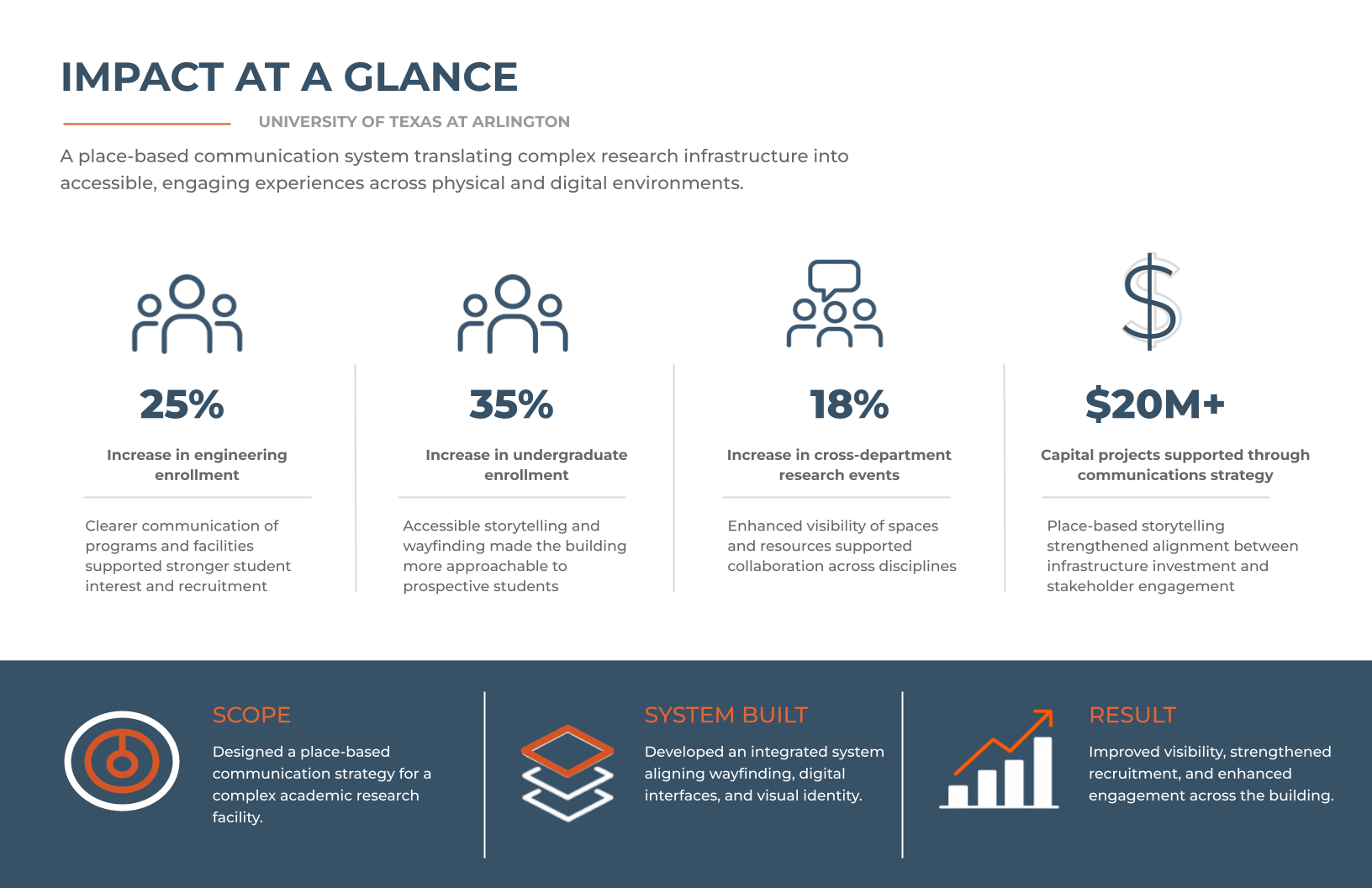
A place-based communication system translating complex research infrastructure into accessible, engaging experiences across physical and digital environments.
IMPACTA place-based communication system translating complex research infrastructure into accessible, engaging experiences across physical and digital environments.
By improving clarity across both digital and physical touchpoints, the work supported increased enrollment, stronger cross-department collaboration, and more effective engagement with research initiatives.
By improving clarity across both digital and physical touchpoints, the work supported increased enrollment, stronger cross-department collaboration, and more effective engagement with research initiatives.
Established a structured spatial narrative framework that translated complex research, sustainability, and infrastructure into clear, accessible experiences
Created alignment across physical and digital touchpoints through a cohesive, place-based communication system
Improved access to information and resources, enabling intuitive navigation and stronger engagement across the building
Reduced fragmentation across materials by unifying wayfinding, kiosks, maps, and print into a coordinated system
Introduced integrated communication layers that enhanced visibility, supported collaboration, and connected users to spaces and resources in real time
When complex environments are made clear and accessible, they do more than inform. They invite participation, strengthen connection, and extend the impact of the work within them.
Big ideas:
Real impact.
When your work is this impactful, how clearly is it being seen, understood, and scaled? How might clearer systems, stronger narratives, and intentional design unlock the full potential of your organization?